
A dedicated baking station keeps all necessary tools and ingredients within arm's reach, dramatically improving workflow efficiency.
Transform your kitchen into a professional-grade workspace by designating clear, functional zones for every aspect of food preparation.
Professional kitchens have long operated on the brigade system — each station has a defined purpose, and the movement between them follows a deliberate logic. The same principle applies to home kitchens, regardless of size.
By assigning specific zones to specific tasks, you eliminate the chaos of searching for tools, crossing paths with yourself, and repeating steps. Each zone is equipped with exactly what it needs — nothing more, nothing less.
A dedicated baking station keeps all necessary tools and ingredients within arm's reach, dramatically improving workflow efficiency.
Each zone serves a distinct purpose. Together, they form a complete food preparation ecosystem.
Located near the sink, this zone handles all water-based tasks. Washing produce, soaking grains and legumes, and initial rinsing all happen here before food moves deeper into the kitchen.
Counter space dedicated to measuring, mixing, and dry prep. Here you combine ingredients, follow recipes precisely, and prepare baked goods or spice mixes without moisture interference.
A dedicated cutting board area with knives, peelers, and mandolines within easy reach. Good lighting and ample space are essential. This is the most-used prep zone in any kitchen.
Centered around the stove and oven, this zone is where heat transforms prepared ingredients into meals. Keep pot holders, timers, and frequently used utensils here.
Encompasses pantry shelves, refrigerator, and freezer. Organized storage enables quick inventory checks, reduces food waste, and speeds up the planning phase of every meal.
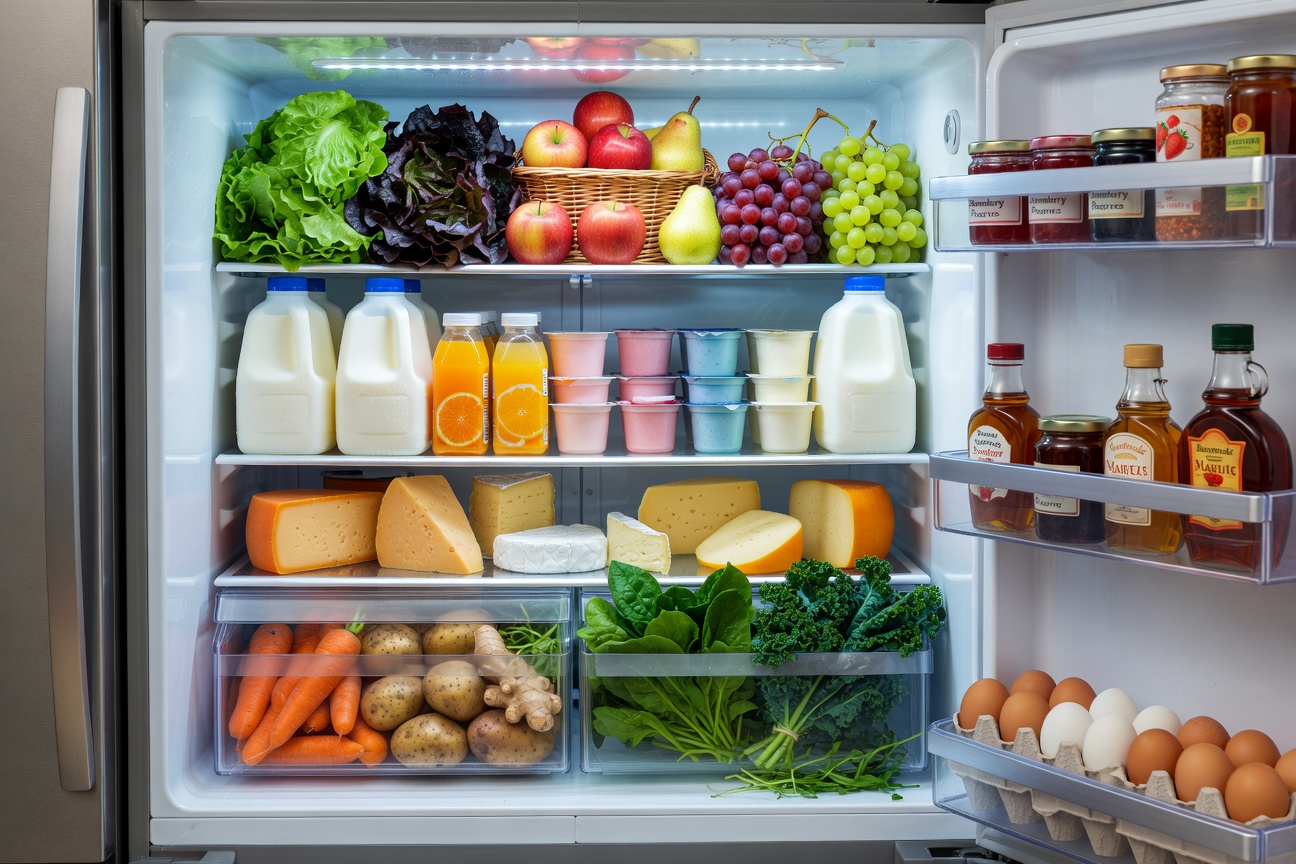
Your refrigerator is more than a cold box — it's a precision storage zone. Assign each shelf a purpose: dairy on the top, proteins on the bottom, fruits and vegetables in dedicated drawers.
Store prepped ingredients in clear, labeled containers at eye level so they're the first thing you reach for. Organize by prep date to ensure freshness and eliminate waste.
Whether you have a sprawling kitchen or a compact galley, these principles make zone planning effective.
Observe how you currently move during cooking and identify repeated patterns. Your zones should follow these natural paths, not fight them.
Every zone should have everything it needs within arm's reach. Avoid storing items in zones where they won't be used — it creates clutter and confusion.
Place your three primary zones — sink, stove, and refrigerator — at the points of a triangle. This classic principle minimizes unnecessary travel during cooking.
Clean each zone after use before moving to the next. This prevents cross-contamination, keeps workspace clear, and maintains the integrity of each zone's purpose.
Small kitchens can combine zones on a rolling cart or use a single large cutting board that doubles as a prep surface. The zone concept adapts to any space.
Your cooking habits evolve over time. Reassess your zone layout seasonally and make adjustments based on what's working and what's creating friction.